

Waymo's driverless vehicles were involved in 68% fewer police reportable crashes per vehicle mile traveled than human drivers in the same cities, according to new research from the Insurance Institute for Highway Safety (IIHS).
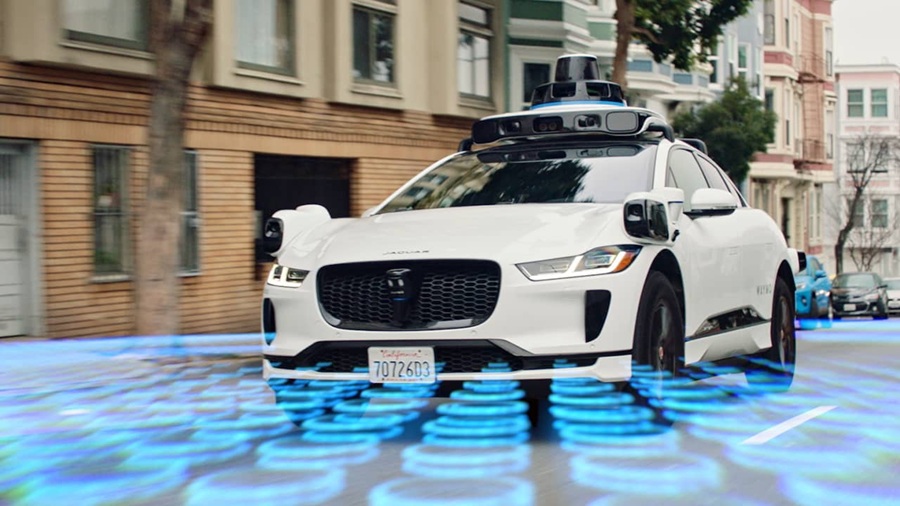
Image Source: Waymo
The sample was restricted to crashes that a person would typically report to the police.
"The results show that, on a limited scale, these driverless cars are safer than human drivers — who can be impaired or drowsy or suffer lapses in attention," IIHS President David Harkey said. "However, the present data collection system isn't good enough to allow continuous monitoring of a large-scale expansion."
Waymo driverless robotaxis are classified as Level 4 on the automation scale created by SAE International, which means the automation can do all the driving with no human supervision under certain conditions.
IIHS researchers estimated that only 22% of the 736 public-road crashes in which the automation was engaged were likely police-reportable — 89 crashes involving Waymo vehicles, 50 involving Cruise vehicles, 10 involving Zoox vehicles and 10 involving other companies. Because mileage numbers were only available for Waymo, they used its crashes to calculate self-driving vehicle crash rates. Of Waymo's 89 police-reportable crash involvements, 64 were in driverless operation, and the others involved supervised use of the automation.
Waymo vehicles traveled about 50 million miles in driverless operation over the study period, compared with about 222 billion miles by human drivers over the same period and in the same locations. Overall, Waymo's crash involvement rate was 68% lower than that of human drivers — 76% lower in Phoenix, 35% lower in San Francisco, 71% lower in Los Angeles, and 4% higher in Austin, where the sample size was relatively small. Waymo vehicles were involved in 85% fewer single-vehicle crashes and 81% fewer injury crashes per VMT than human drivers.
"Those are encouraging signs for the future of driverless vehicles," said Eric Teoh, IIHS director of statistical services and lead author of the study. "Now we need to get the data collection system right, so that we can ensure that level of safety continues as these technologies become more prevalent."
"This new IIHS research underscores why these technologies should be judged by consistent data collected over millions of miles, not by overreactions caused by a single viral video, isolated incident, or perception of a lack of safety that isn’t supported by data," said Jonathan Adkins, Chief Executive Officer, the Governors Highway Safety Association (GHSA). "On that basis, the findings are clear: Waymo’s driverless vehicles crashed far less often than the people driving around them. Human drivers will continue to make mistakes, and we should not allow the pursuit of a perfect AV safety record to become a barrier to deploying technologies that are demonstrating the ability to make our roads safer."



